On the 12th September, the ΛΑΓΩΟΣ team made the trip from Innsbruck to Weimar for four days of research at the Goethe-Schiller-Archiv (GSA). It is at the GSA, a part of the ensemble of cultural and research institutions constituting the Klassik Stiftung, that the nine surviving volumes of Hase’s secret diary are preserved.
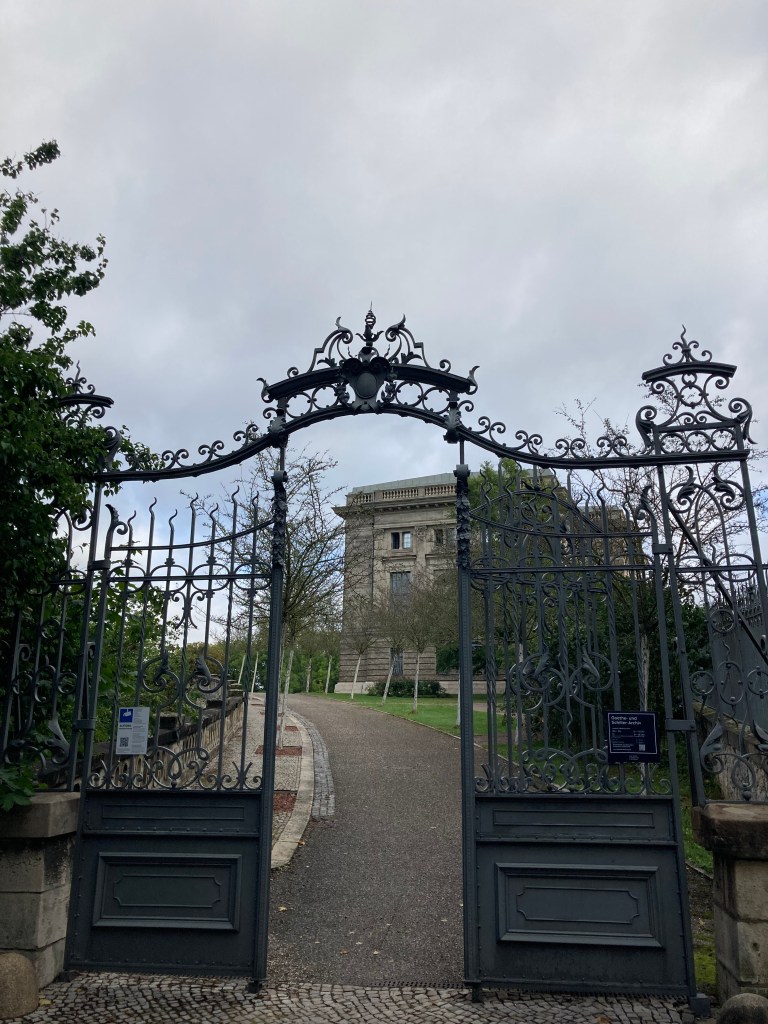
The ΛΑΓΩΟΣ project obtained high quality reproductions of the diary volumes for the forthcoming online edition of the Greek text at the beginning of the year. The aim of this trip, then, was to gain a more nuanced understanding of the material aspects of the books themselves, to handle (carefully!) the objects which the team will spend the coming years and analyse closely in the course of their work.
Over the four-day visit, the team had the chance to inspect the diaries individually, and to discuss particularly interesting elements or new observations in-situ. To this end, the GSA kindly made available their seminar room, which allowed the group to combine archival research with constructive exchange.
Alongside the Greek diary volumes, Mariia, Lev and William also took advantage of the visit to consult a range of other Hasiana preserved at the GSA. These additional items were selected in accordance with the specific interests of each researcher and included a series of letters (both from and to Karl Benedikt), a collection of travel documents from the scholar’s trip to Algiers, and four sets of general notes that Hase made during his earliest years in Paris.
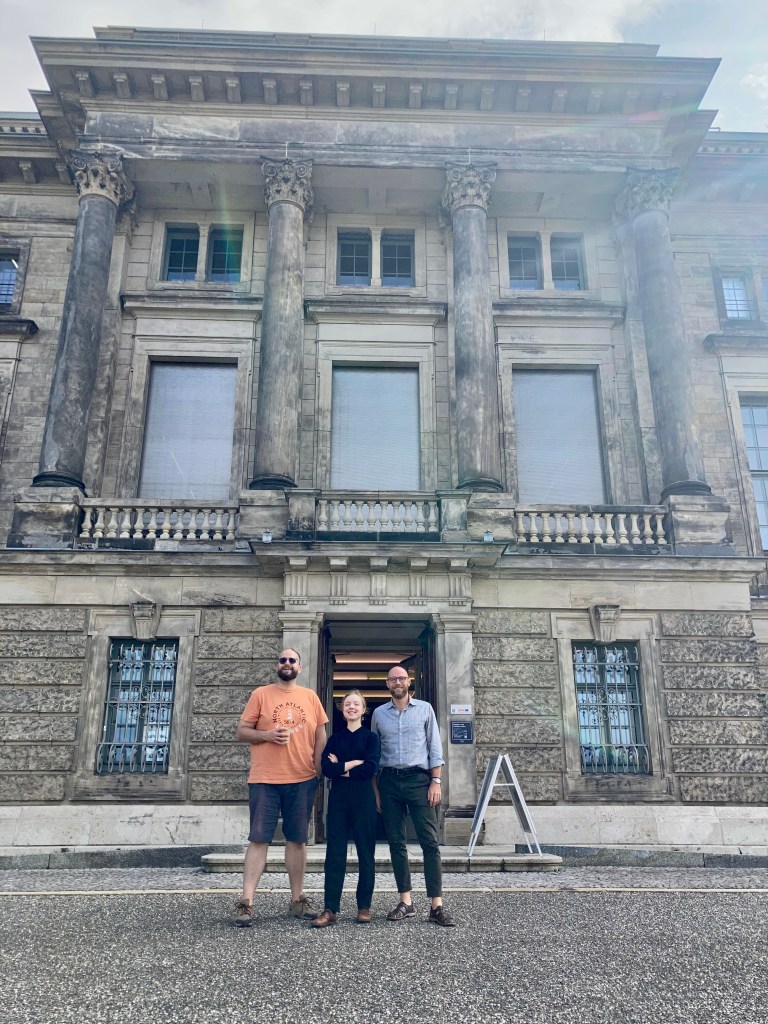
The team’s visit to the city of Weimar allowed us, then, in the first place hands-on interaction with the documents at the heart of our project. The fact that Karl Benedikt Hase spent a portion of his formative years in the city, attended the Gymnasium, went to church and engaged with the city’s intellectual elite at the turn of the 19th-century also meant that the chance to walk the streets of Weimar brought a period of Hase’s youth to life.
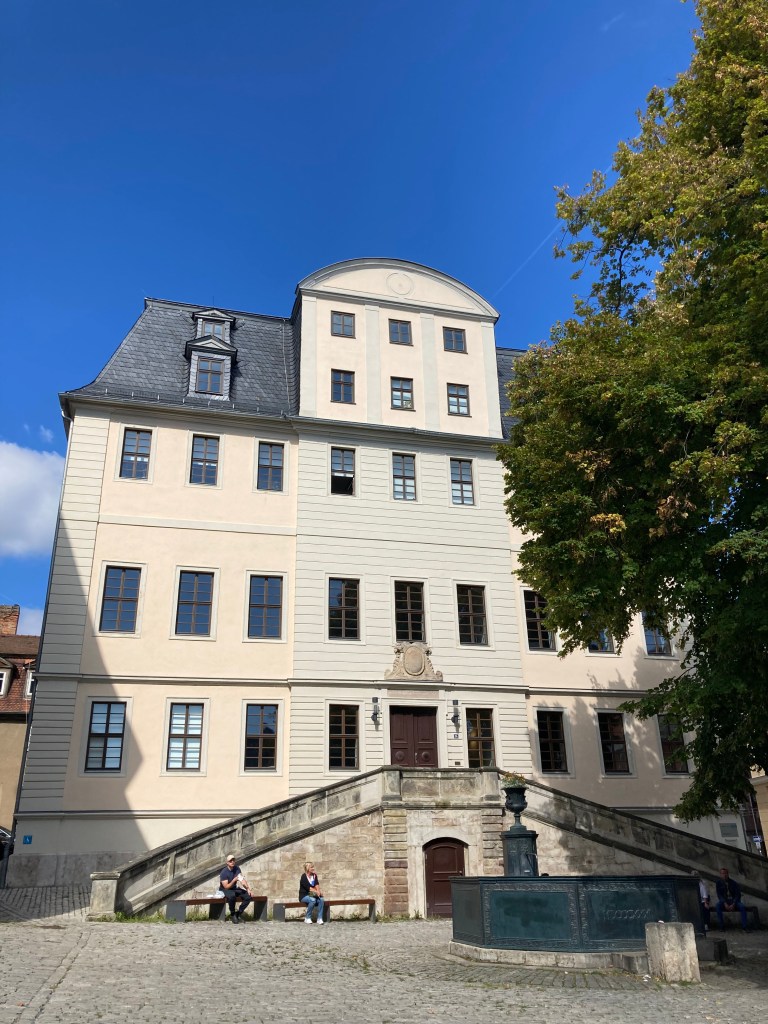
The early autumn weather gave us the opportunity to visit Hase’s secondary school (“The Old Gymnasium”), as well as the city’s “Herderkirche”, where the altarpiece of Lucas Cranach (the Younger) brought back memories of the Innsbrucker Jakobsdom. Brimming with energy and fresh ideas for research on the diary, the team returned to Innsbruck to begin the next phase of work on the ΛΑΓΩΟΣ text.
 LAGOOS [λαγωoς]